
Senegal's $4.5bn Water Compact puts the energy cost of water at the centre of its reform
On 15 April 2026, at the World Bank–IMF Spring Meetings in Washington, Senegal presented its Water Compact 2026–2030, a reform-and-investment platform targeting universal access to drinking water and...
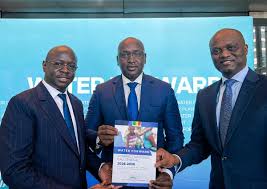
On 15 April 2026, at the World Bank–IMF Spring Meetings in Washington, Senegal presented its Water Compact 2026–2030, a reform-and-investment platform targeting universal access to drinking water and sanitation by 2030 against a programme cost of $4.5-billion. Senegal was among 14 countries in the first wave of the World Bank-led Water Forward Initiative, and the launch was attended by World Bank Group President Ajay Banga and UN Secretary-General António Guterres.
The Senegalese delegation was led by ministers Cheikh Diba, Abdourahmane Sarr and Cheikh Tidiane Dièye; Senegal also chairs AMCOW and co-hosts the 2026 UN Water Conference.
For the energy sector, what distinguishes this Compact from a conventional water plan is that it identifies the energy intensity of water provision as a core financing problem and makes renewable power a central remedy. Arabian PostArabian Post
Energy as a water-sector cost driver
The Compact states that energy accounts for roughly 30–35% of water-sector operating expenses in Senegal, and sets out to reduce that burden by deploying renewable energy across urban and rural water infrastructure. This is the water-energy nexus expressed as an operating-cost line rather than an abstraction: a third of the cost of moving and treating Senegalese water is electricity, and the Compact treats decarbonising that load as inseparable from the sector's financial sustainability.
The renewable-energy commitments
The plan's energy content is specific. Planned investments include solar-powered boreholes, renewable energy for desalination and bulk-transfer schemes, and solar installations for existing utilities. For rural water services, the Compact proposes replacing diesel- or grid-powered boreholes with solar pumping to cut operating costs and emissions, and explores a larger public-private partnership (PPP) solar plant that would supply rural water operators at preferential tariffs, aggregating demand to improve affordability across the sector.
Desalination is the most energy-significant element. To reduce the Dakar–Mbour–Thiès corridor's dependence on bulk water piped from Lake Guiers — a corridor holding 60% of the population and 80% of national potable-water demand — Senegal is advancing two major PPPs: the Grand Water Transfer scheme and the ACWA Power Grande-Côte desalination plant.
Desalination is among the most electricity-intensive water technologies, so pairing it with renewable supply, as the Compact envisages, is what determines whether new water capacity adds a major new load to Senegal's grid or arrives substantially self-powered.
Financing structure
The Compact seeks to mobilise the $4.5-billion through a mix of public finance and PPPs, with private capital expected to cover about 30% of the total, supported by partnerships with the World Bank Group, the African Development Bank and bilateral partners.
A proposed blended-finance vehicle, the Fonds Bleu Sénégal, would mobilise concessional, private and climate finance — including for renewable-energy desalination — with a capitalisation target of $150-million by 2030. Senegal also plans to restructure the national water company SONES into a wholesale water purchaser and transmission coordinator as independent producers enter through desalination and transfer projects, and to establish an autonomous sector regulator overseeing tariffs and competition.
Assessment
For an energy readership, the Compact is significant as a model: it frames renewable energy not as an environmental add-on to water infrastructure but as the lever that makes a water-investment programme financially viable, by attacking the 30–35% energy-cost share directly.
The approach also creates concrete demand for solar generation — distributed solar pumping, utility-scale solar for rural water operators, and renewable supply for desalination — that would register on Senegal's wider power planning. The qualification is the one common to ambitious reform platforms: the targets and the renewable commitments are stated intentions backed by a financing logic, not yet delivered capacity, and their realisation depends on closing the PPPs, standing up the regulator and the Fonds Bleu, and converting the pipeline into operating assets. The energy-sector test is whether the solar and renewable-desalination components reach financial close at the scale the Compact describes.