
After ferrochrome, a queue forms: South Africa's industrial power discounts are multiplying
The restart of Glencore Merafe's Boshoek and Wonderkop ferrochrome smelters, unlocked by a discounted 62c/kWh electricity tariff, was widely reported as a rescue for a single distressed industry. Se...
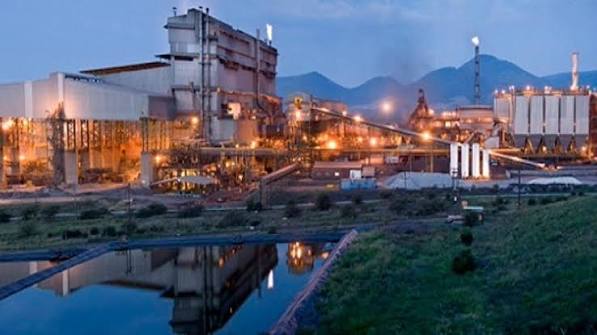
The restart of Glencore Merafe's Boshoek and Wonderkop ferrochrome smelters, unlocked by a discounted 62c/kWh electricity tariff, was widely reported as a rescue for a single distressed industry.
Seen against the wider record, it is something more consequential: the latest and most visible instance of a pattern in which South Africa is increasingly keeping its energy-intensive industries alive through negotiated, below-standard electricity deals, one sector at a time.
The mechanism is the negotiated pricing agreement (NPA), a bilateral tariff struck between Eskom and a large industrial customer and approved by the National Energy Regulator of South Africa (Nersa).
The ferrochrome deal is far from the first. The most significant precedent is the 10-year NPA that Nersa approved in 2021 for South32's Hillside aluminium smelter in Richards Bay, the largest primary aluminium smelter in the southern hemisphere and, at roughly 10.3 TWh a year, about 5.6% of Eskom's total electricity sales. Under that agreement, Hillside receives a discount estimated at around 50% over the contract term, worth roughly R10-billion a year against Eskom's standard Megaflex industrial tariff.
The details became public only after the advocacy group Open Secrets forced disclosure, an echo of a 2013 court ruling that had similarly compelled release of the earlier agreement with Hillside's predecessor, BHP Billiton, which was found to be paying about 15% of the tariff ordinary consumers faced.The ferrochrome framework, approved by Cabinet and championed by Electricity and Energy Minister Kgosientsho Ramokgopa, has widened the door.
The 62c/kWh rate covers both the Glencore Merafe venture and Samancor Chrome, and Eskom has already sought temporary relief for Transalloys, the country's last remaining manganese smelter, whose R5-billion Mpumalanga plant is in peril. ArcelorMittal South Africa, which spends about R3.5-billion a year on electricity, is in high-level discussions with Eskom for its own favourable tariff, and Eskom has explicitly indicated that ferroalloy and iron and steel producers will receive priority consideration for similar arrangements.
The queue, in other words, is lengthening, and the utility has signalled it intends to work through it.The rationale is real and rooted in a genuine crisis. Electricity tariffs have risen more than 1,100% since 2003, and industrial electricity sales have fallen about 40% from their 2004/05 peak, as energy-intensive users closed, contracted or migrated. South Africa, holder of an estimated 70% of global chromite reserves and home to a strategically important minerals-processing base, has watched more than half its chrome furnaces go idle. The developmental logic for retaining that industry, employment, exports, downstream value chains and the load itself, which contributes to Eskom's fixed costs, is not trivial.But the accumulation of deals has drawn sharp scrutiny on three grounds.
The first is transparency. Eskom has consistently declined to publish the agreements, citing commercial sensitivity, and has argued that disclosure would create expectations of similar treatment among other applicants, precisely the dynamic now unfolding. Civil-society groups and analysts argue that preferential pricing funded, in effect, from a public utility should be scrutinised like any subsidy, through open modelling and public hearings, and that this is not happening.
The second is whether the discounts are even justified on their own terms. An analysis by Meridian Economics of the Hillside deal concluded that the grid-stability benefit Eskom cites to justify the discount, Hillside's ability to be interrupted during shortfalls, could be replicated more cheaply with roughly 1.2 GW of two-hour battery storage at under R3-billion a year, implying a net discount to the smelter of around R7-billion annually that the economic case did not fully support.
The third, and most damaging, is that the strategy may not even be working. In a draft report dated 29 June 2026, Nersa itself concluded that NPAs have fallen short of protecting South Africa's industrial base: NPA tariffs for smelters rose 200% over four years, from 37.65c/kWh to 112.64c/kWh, even as the agreements were meant to shield trade-exposed users, and the combination of high volumetric rates and expanding fixed-cost recovery has left firms unable to cut costs enough to survive. If the discounts are simultaneously too generous to be fiscally sound and too small to save the industries they target, the framework satisfies no one.Underneath the case-by-case negotiations sits a strategic fork the country has not openly resolved.
Either South Africa is building a competitive, transparent wholesale electricity market with open grid access and market-based prices, or it is reverting to ad hoc industrial policy administered through negotiated discounts from a fiscally constrained utility. The two are in tension. Analysts including those at Green Building Africa argue that if energy-intensive producers are structurally uncompetitive at market tariffs, the durable answer is not deeper discounts from Eskom but accelerated reform, enabling direct procurement from independent power producers (IPPs), wheeling and aggregation at scale, which would bring new generation, diversify supply and align with decarbonisation commitments.
A 62c/kWh framework, on this reading, risks signalling that retaining Eskom's load takes precedence over the market liberalisation that reform was meant to deliver.That tension is sharpened by Eskom's own finances. National Treasury has indicated bailouts and debt takeovers reaching nearly R496-billion in 2025/26; Eskom's debt stands near R372-billion; municipal arrears have climbed above R103-billion. Against that backdrop, selling power below its roughly 80c/kWh coal generation cost to a widening list of industrial customers is not a marginal accommodation. It is a strategic bet, made repeatedly, that retaining these high-volume users, some of whom might otherwise leave for IPP supply, is worth the revenue foregone.
Whether that bet is sound depends on questions the current process is not transparently answering: how the discounts are modelled, who ultimately absorbs the shortfall, and whether the three-to-ten-year windows are buying recovery or merely deferring closure. Ferrochrome was the latest to receive an answer. It will not be the last to ask.