
Power cuts in DRC's Haut-Katanga tied to $33m SNEL–ZESCO billing dispute
Repeated power cuts in the south-eastern Democratic Republic of Congo — affecting the territories of Sakania, Kasenga and Pweto and the commune of Mokambo, in Haut-Katanga province — stem from a finan...
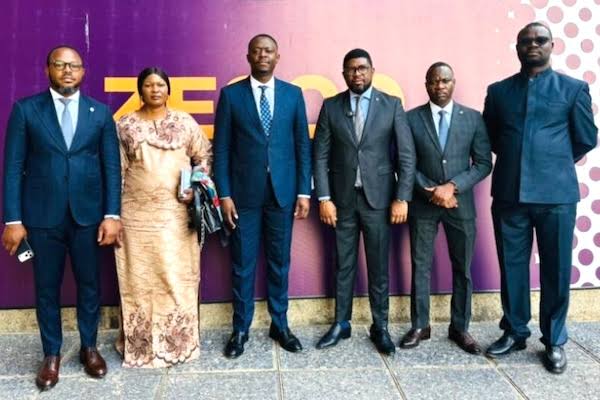
Repeated power cuts in the south-eastern Democratic Republic of Congo — affecting the territories of Sakania, Kasenga and Pweto and the commune of Mokambo, in Haut-Katanga province — stem from a financial dispute between the DRC's state utility Société nationale d'électricité (SNEL) and Zambia's ZESCO, Congolese officials have said.
Speaking at the 11th ExpoBeton forum, held in Kalemie from 27 to 30 May 2026, Hydraulic and Electrical Resources Minister Aimé Molendo Sakombi said the dispute centres on a claim estimated at $33-million, which SNEL contests on the grounds that the alleged debt has not been substantiated. ZESCO suspended supply to several Haut-Katanga localities in February and again in May 2026, citing unpaid obligations and issues with the contractual framework between the two utilities.
The arrangement at issue is a long-standing cross-border distribution supply. ZESCO feeds these Congolese border settlements directly at distribution voltage — Sakania and Mokambo at 11 kV and Pweto at 33 kV — rather than through bulk transmission, reflecting their isolation from SNEL's own grid. Congolese civil-society and local-press accounts attribute the breakdown to a supply contract that has not been renewed since 2018 despite repeated reminders to SNEL. In a letter dated 12 May, ZESCO United gave SNEL 48 hours' notice before disconnecting the three territories and Mokambo, prompting alarm among residents and local civil-society representatives.
SNEL's director of studies and planning, Albéric Tukuzu, told the forum that the cuts were carried out in violation of established procedures, and that Congolese authorities had moved to limit disruption and reduce the affected communities' reliance on imported electricity.
On remedies, Tukuzu said generators had already been deployed to maintain supply, and that SNEL's studies and planning department had completed assessments for two 2 MW solar plants to serve Mokambo and Pweto, operating as hybrid systems combining solar generation with generator backup. Under the design, solar panels would generate during daylight while generators provide backup and recharge batteries when sunlight is insufficient, an arrangement expected to deliver up to 22 hours of electricity a day.
For Sakania, a separate solution involves building an approximately 4 km power line to supply the town from an alternative source. SNEL has described these as transitional measures to strengthen energy resilience in the border areas pending longer-term solutions.
The 2026 episodes are not isolated: similar cuts were recorded in the same border zone as early as 2016, also amid debt disputes involving ZESCO. The recurrence points to a structural vulnerability: despite the DRC's substantial hydropower potential, these remote south-eastern settlements remain dependent on Zambian supply because they sit beyond the reach of SNEL's interconnected network.
The dispute also lands at a difficult moment for ZESCO, which has faced its own domestic supply deficit and has been importing power and tightening commercial terms — context that helps explain its firmer stance on cross-border receivables. Wider regional integration efforts, including the long-planned Kolwezi–Solwezi interconnection intended to reinforce supply in the Katanga–Copperbelt corridor, remain works in progress.