
Data Centres, Digital Infrastructure, and the New Demand Curve Africa's Grid Must Serve
Africa's power infrastructure was designed for a different economy. The demand curve utilities modelled for — light industry, commercial buildings, residential loads — is being disrupted by a new cate...
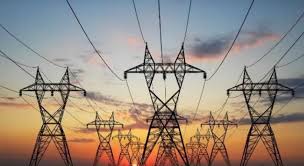
Africa's power infrastructure was designed for a different economy. The demand curve utilities modelled for — light industry, commercial buildings, residential loads — is being disrupted by a new category of energy consumer that requires uninterrupted, high-density power supply: data centres.
The continent's digital economy is growing at a pace that has consistently exceeded projections. E-commerce, mobile payments, cloud services, streaming, and AI applications are creating demand for data processing capacity that must, ultimately, be powered. Projects like PAIX Data Centres in Dakar — scheduled for significant expansion in 2026 with high-power colocation capacity — are strengthening the digital backbone of West Africa. In South Africa, Nigeria, Kenya, and Egypt, data centre investment is accelerating rapidly.
The energy implications are significant. A large-scale data centre can consume as much electricity as a medium-sized industrial facility — but unlike a factory, it requires power that is continuous, high-quality, and resilient to microsecond interruptions. The reliability standards required by hyperscale data centre operators are, in most of Africa, simply not available from the national grid.
This has created a new market for dedicated energy solutions: behind-the-meter renewables, integrated storage, and private grid connections that bypass an unreliable public network. Microsoft, Google, and Amazon have all established African data centre footprints. Their energy procurement strategies are directly driving investment in renewable generation and storage infrastructure.
The broader implication for power planners is that Africa's grid must now be designed for a dual demand profile: the hundreds of millions of citizens who need their first reliable connection to electricity, and the digital infrastructure operators who need a level of reliability that most African grids have historically been unable to provide. Meeting both simultaneously is the infrastructure challenge of the decade.