
Matadi terminal rebuild carries energy-sector weight for the DRC's power and mining supply chains
The $250-million reconstruction of the container terminal at the Port of Matadi, the Democratic Republic of Congo's principal maritime gateway, is emerging as a quiet but consequential piece of energy...
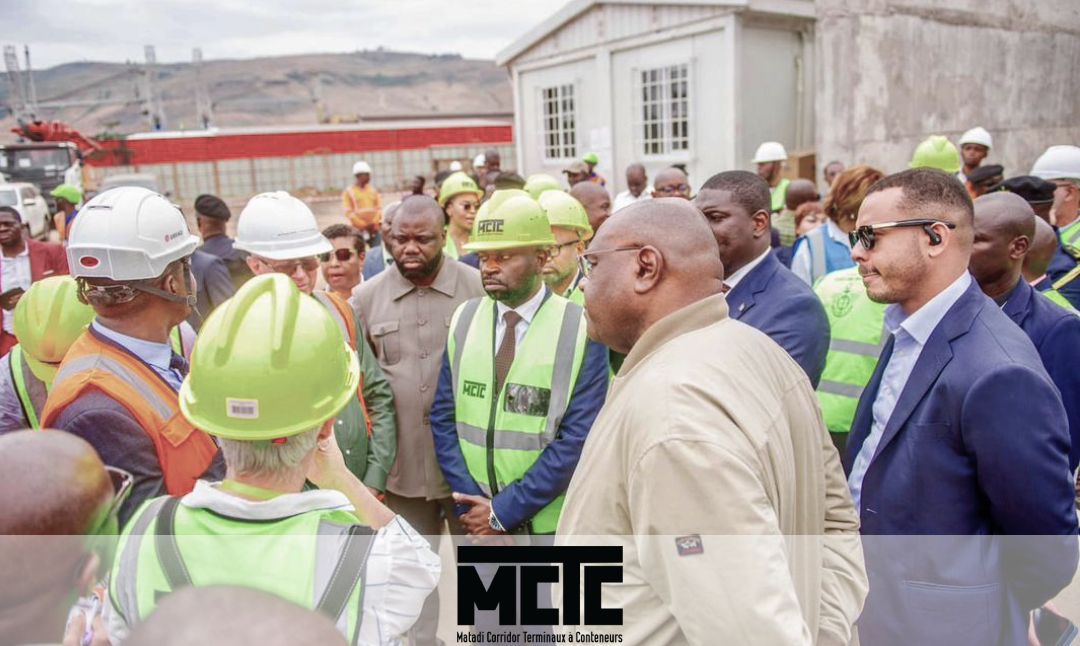
The $250-million reconstruction of the container terminal at the Port of Matadi, the Democratic Republic of Congo's principal maritime gateway, is emerging as a quiet but consequential piece of energy-sector infrastructure — both as the import channel through which the country's power equipment and fuel arrive, and as a facility whose own design reflects the realities of operating energy-intensive logistics on a constrained grid.
Matadi Corridor Terminaux à Conteneurs (MCTC) holds the concession for quays 5, 6 and 7 under a public-private partnership that, according to a company profile published by Congo Mining Network on 12 June 2026, traces to a bilateral investment accord between the DRC and Qatar signed on 10 February 2022.
The concession was won by the MSC-SIG consortium, anchored by the Mediterranean Shipping Company (MSC), for an initial 20 years with a possible ten-year extension. MCTC took over a 250 m section of the 524 m terminal in 2024 under a partnership with the Office National des Transports (ONATRA), integrating the State company's staff. ACP
Eiffage Génie Civil Marine was awarded the design-build contract in January 2025, in a deal the French group values at more than €100-million, covering a new 350 m by 30 m piled quay, three access bridges, an operations building, a workshop and the refurbishment of the 7 ha logistics platform over 27 months, with the terminal operational throughout.
The energy dimensions of the design are specific, the rebuilt terminal will have an electrical network with transformers and backup generation providing 24/7 power continuity,
integrated solar panels on the new operations building and workshop, and a data centre with fibre-optic infrastructure — a configuration that pairs grid supply with captive backup and embedded renewable generation, the standard architecture for critical-load facilities in markets where utility supply is unreliable.
For the energy sector, the terminal's relevance runs through the import channel. Fuel and manufactured goods constitute much of Matadi's cargo base, and the construction notes that generators, electrical transformers and substation equipment destined for industrial enter the country as containerised and project cargo through the port.
Power project developers and independent power producers (IPPs) building in the DRC face the same logistics chain: long dwell times at Matadi translate into delayed equipment deliveries and extended construction schedules.
MCTC's stated targets — a 40% increase in handling capacity and materially reduced dwell times — would, if achieved, compress that risk.
The solar integration also carries a transition-finance signal, including port handling; the profile argues a partly solar-powered terminal is better positioned within those Scope 3 calculations than a diesel-dependent one, though it offers no figures on the solar capacity to be installed or the share of terminal load it would cover.
The project sits within a wider DRC logistics strategy that includes the Banana deep-water port, the Lobito Corridor and a February 2026 memorandum of understanding between the Ministry of Transport and Abu Dhabi-based AD Ports for a separate multi-purpose terminal at Matadi.