
South Africa's Transmission Crisis: The R440 Billion Problem Blocking the Energy Transition
South Africa has arguably the most developed renewable energy pipeline in Africa. It also has a transmission system that is struggling to keep pace with what the private sector is trying to build. Th...
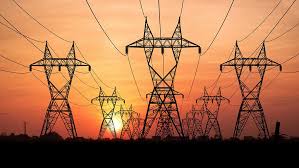
South Africa has arguably the most developed renewable energy pipeline in Africa. It also has a transmission system that is struggling to keep pace with what the private sector is trying to build.
The numbers are sobering. The combined Transmission Expansion Plan and Independent Transmission Projects pipeline represents approximately R440 billion in capital requirements. Near-term collector grid needs — the infrastructure required to connect renewable energy projects to the main grid — add another R30 billion. Against these requirements, current spending is inadequate, financing mechanisms are still being developed, and the institutional capacity to plan, procure, and build at speed is being tested.
The consequences are concrete. Renewable energy projects with power purchase agreements and signed financing documents are waiting for grid connection. Investors who have committed capital are incurring carrying costs while waiting for evacuation capacity that should, in a well-planned system, have been built ahead of the generation it serves. The term "stranded assets" is being used with increasing frequency by project developers who are ahead of the grid.
Eskom, the national utility responsible for transmission, is navigating a capital programme of historic scale while simultaneously managing a balance sheet restructuring, an unbundling process, and the operational complexity of a generation fleet with significant unreliable capacity. The company is not resourced to solve this problem alone.
The answer lies in the model being piloted through Independent Transmission Projects — privately financed, privately built transmission infrastructure contracted by government. Australia, Chile, and Brazil have used similar models to accelerate grid build-out. South Africa is in the early stages of proving this works in an African context. The first ITP projects will be instructive. If they reach financial close and construction on schedule, the model will scale. If they do not, the energy transition will slow.