
Faster turnaround at Lagos ports eases a cost line in Nigeria's fuel and equipment imports
Improved vessel turnaround at Nigeria's two main Lagos ports, recognised in the latest World Bank port-performance rankings, carries a direct bearing on the country's energy supply chain, where the sa...
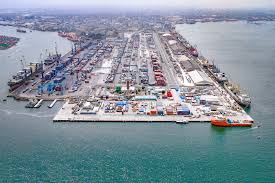
Improved vessel turnaround at Nigeria's two main Lagos ports, recognised in the latest World Bank port-performance rankings, carries a direct bearing on the country's energy supply chain, where the same berths handle the petroleum-product cargoes and power-sector equipment on which Nigeria remains heavily dependent.
The World Bank's Container Port Performance Index (CPPI), developed using S&P Global Market Intelligence data, ranked Tin Can Island and Apapa among the 15 most-improved ports globally for total vessel time between 2020 and 2025; the index measures the period from a ship's arrival at port limits to its departure from the berth. Tin Can Island's score improved by 42 points, from -68 in 2020 to -25.8 in 2025, and Apapa's by 35 points, from -61 to -26.4; in absolute global terms the two ranked 318th and 320th respectively, while Nigeria's Onne port, with fewer vessel calls, ranked highest nationally at 84th.
The report noted that Nigerian ports, like others in Sub-Saharan Africa, generally record longer vessel times owing to import-dominated trade structures and capacity constraints.
That import dependence is acute in energy. Nigerian Ports Authority shipping data showed vessels delivering a combined 95,000 tonnes of petrol and automotive gas oil to Apapa and Tin Can over just two days in late March 2026. Despite the ramp-up of the 650,000 barrels-per-day Dangote refinery, Nigeria remained Africa's largest importer of refined petroleum products in recent years, with fuel imports costing about $14-billion in 2024 before falling sharply through 2026 as domestic output rose to cover the bulk of demand.
For the downstream sector, port efficiency is a measurable component of landed fuel cost. Vessel waiting time, berth availability and discharge speed feed into demurrage and the final cost of imported product — a sensitivity heightened by a live policy dispute. In April 2026 the World Bank, in its Nigeria Development Update, argued that the suspension of fuel-import licences since January 2026 had stifled competition and pushed prices above import-parity levels, with imported petrol then about 12% cheaper than Dangote's product.
Where imported fuel competes on margins that fine, the handling efficiency of the receiving port is not a trivial variable.
The same logic extends to the power sector, which imports generation and transmission equipment through these berths, and where extended dwell times translate into delayed project schedules and tied-up working capital.
The picture is not uniformly positive. Industry figures cautioned that the CPPI captures only vessel call-up time, not the wider congestion picture; the president of the Shippers' Association of Lagos State, Jonathan Nicol, attributed the improvement partly to stronger regulatory coordination through the Nigerian Shippers' Council but did not rule out a reduction in vessel calls as a factor, and flagged the problem of empty containers left behind by shipping lines.
A Nigerian advocacy group, the Sea Empowerment and Research Centre, estimated in 2025 that some 100,000 abandoned empty containers were clogging Nigeria's terminals and roads. Congestion of that kind raises landside haulage costs and idling — frictions borne, ultimately, by the fuel and equipment moving through the same gates.