
Why an African water delegation to Budapest is an energy story
When 45 senior water-sector decision-makers from 15 African countries travelled to Budapest in late February 2026 to study Hungarian water-treatment technology, the visit was framed as a water and san...
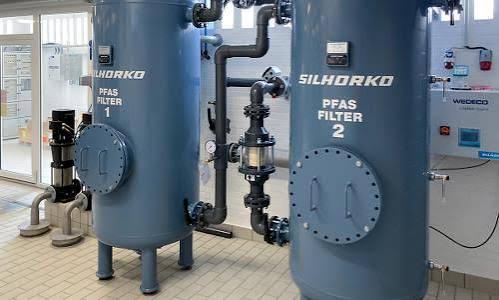
When 45 senior water-sector decision-makers from 15 African countries travelled to Budapest in late February 2026 to study Hungarian water-treatment technology, the visit was framed as a water and sanitation exercise.
The delegation, hosted by the Hungarian Water Partnership from 24 to 28 February and joined to the Future of Water conference at the Planet Budapest 2026 expo, was described as the first high-level African water mission of its kind.
But for the continent's power sector, the more consequential subject was one the official programme treated only implicitly: water infrastructure is among the largest and fastest-growing consumers of electricity in many African economies, and the technologies on display in Budapest carry direct energy implications. ACPThe hidden electricity load in every litreMoving, treating and disposing of water is energy-intensive, and the relationship runs in both directions — what specialists call the water-energy nexus.
Water extraction, treatment, distribution and disposal all consume energy, and the coupling is strongly asymmetric: water systems depend heavily on energy even where energy systems depend only weakly on water.
The intensity rises sharply with the method of supply. Groundwater abstraction can consume 20–30% more energy per unit of water than surface water, depending on well yield and the height over which water must be lifted.
where desalination enters the mix, the load becomes a macroeconomic factor. In Saudi Arabia, an estimated 9% of total annual electricity consumption is attributable to groundwater pumping and desalination, while some Arabian Gulf states devote 5–12% or more of total electricity consumption to desalination alone. Globally, desalination, wastewater treatment and conventional drinking-water treatment together account for roughly 1% of energy use, with the heaviest desalination toll in the Middle East and North Africa, where it can reach up to 18.6% of regional electricity consumption.
Why this matters more in Africa than the figures suggest
The African context sharpens the problem in ways the headline numbers understate. Energy use is generally not treated as a key performance indicator by African water regulators and utilities, and operational study of the nexus remains limited compared with developed regions.
That blind spot sits atop a power system already short of supply. When a utility's pumping and treatment load is invisible in its planning, it is also invisible in the grid planning that must serve it — yet the demand is real, growing and, increasingly, energy-intensive by necessity.
Diminishing freshwater availability and rising pollution are pushing utilities toward more energy-intensive sources such as groundwater and desalination, even as Africa records the world's highest urban growth rate, with roughly 60% of its population projected to be urban by 2050.
The direction of travel is toward more electricity per litre, in cities that need rapidly more litres. Kenya's experience is illustrative: the water regulator WASREB reported that most Kenyan utilities recorded an average 27% increase in energy costs in one assessment period, driven by higher production, rising national energy prices and drought that lowered surface-water levels and forced a shift to energy-intensive groundwater.
The losses that waste power twice
A particular feature of African systems converts water losses directly into wasted energy. Non-revenue water — water that is pumped and treated but never billed, lost through leaks, vandalism and poor management — is concentrated in unplanned urban settlements, and every such loss represents energy already spent to no end. This is where the Budapest programme's technical content acquired an energy dimension: the visit foregrounded internet-of-things-based leak detection and non-revenue-water reduction, smart metering and analytics, and water reuse. T
he Hungarian programme covered IoT-based solutions to mitigate water loss, smart measurement and analytics, and rainwater harvesting and reuse. Each of these, framed as water-efficiency measures, is equally an electricity-efficiency measure: water not lost is energy not wasted pumping it.
The renewable openingThe nexus also points to opportunity, not only cost. Small-to-medium-scale reverse-osmosis desalination is emerging as a means for off-grid clients to secure reliable drinking water, with these plants increasingly able to integrate renewable energy; a seawater reverse-osmosis plant installed at Witsand in South Africa in 2018 consumed approximately 2.5 kWh per cubic metre for up to 300 cubic metres a day.
A water plant with a predictable daytime load is a strong candidate for solar pairing, and a decentralised, renewables-powered treatment unit can serve communities beyond the grid's reach — the same logic now driving rural electrification across the continent.
For African utilities and the power planners who must supply them, the lesson from Budapest is that water-sector modernisation and energy strategy are not separate files. Efficiency technologies that reduce water losses reduce electricity demand; renewable integration can decouple water provision from strained grids. Treating the two as one is the analytical step the official programme left for others to make.