
Drones, Sensors, and Remote Monitoring: How Technology Is Solving Africa's O&M Challenge
Operating a large renewable energy asset in sub-Saharan Africa presents maintenance challenges that have no direct equivalent in Europe or North America. Spare parts logistics can take weeks or months...
Operating a large renewable energy asset in sub-Saharan Africa presents maintenance challenges that have no direct equivalent in Europe or North America. Spare parts logistics can take weeks or months. Qualified technicians are scarce outside major urban centres. Road access to remote sites is seasonal. The consequence of unplanned downtime — lost generation, PPA payment deductions, lender covenant pressure — is severe.
Technology is directly addressing these constraints, and the solutions being deployed in Africa are often more innovative than those being used in more established markets.
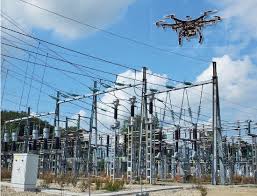
Drone inspection is now standard practice for utility-scale solar farms across Southern and East Africa. Thermal imaging drones can survey a 100 MW solar farm in a day, identifying hot spots, soiling patterns, and connection failures that would take a ground crew weeks to find manually. The technology pays for itself in reduced labour costs and in early detection of faults that, left untreated, would have caused significantly larger losses.
Remote monitoring platforms — combining IoT sensors, satellite connectivity, and cloud-based analytics dashboards — allow operations centres to track the performance of assets distributed across multiple countries from a single location. Fault alerts trigger automatically. Performance benchmarking against weather data identifies underperforming strings or inverters without requiring a site visit. In markets where bandwidth is improving but still limited, compressed data protocols allow meaningful performance monitoring even on low-bandwidth connections.
The next frontier is autonomous maintenance. Robotic cleaning systems for solar panels — designed for high-dust environments including the Sahel, the Kalahari, and the Horn of Africa — are moving from trial to commercial deployment. AI-driven fault diagnosis is reducing the skill level required for first-line fault response, allowing local technicians with basic training to resolve issues that previously required specialist engineers to travel from regional hubs.
The economics of renewable energy in Africa have always been more attractive than the O&M reality suggested. Technology is finally closing that gap.