
WeLight raises €27m with IFC backing to expand rural solar mini-grids into Nigeria and DRC
WeLight, a developer of solar-powered mini-grids for rural communities in sub-Saharan Africa, has raised €27-million in new funding, with the International Finance Corporation (IFC) joining its shareh...
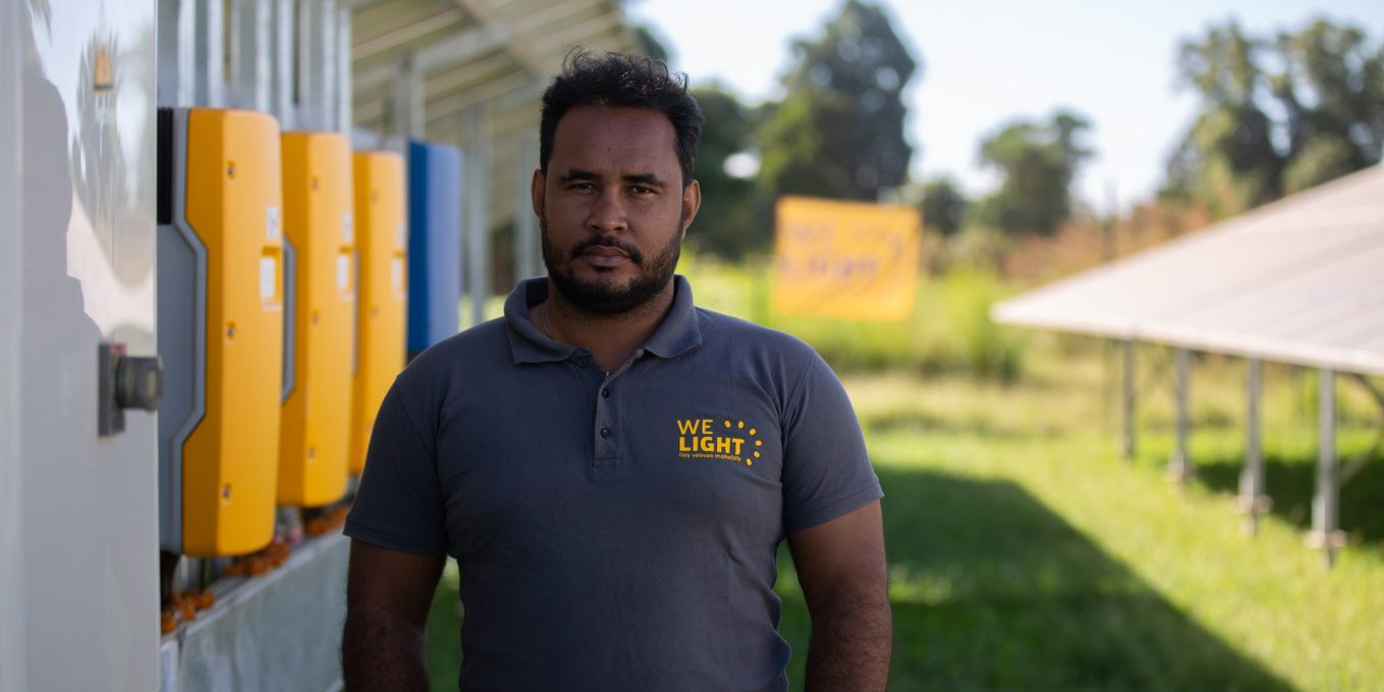
WeLight, a developer of solar-powered mini-grids for rural communities in sub-Saharan Africa, has raised €27-million in new funding, with the International Finance Corporation (IFC) joining its shareholder base to support an expansion into two of the continent's largest unserved markets.
The company announced on 24 June 2026 that the IFC, the private-sector arm of the World Bank Group, had become a shareholder as part of the round, though the size of the IFC's stake was not disclosed. The IFC joins existing backers AXIAN, Sagemcom and Norfund. WeLight said the capital would fund expansion into Nigeria and the Democratic Republic of Congo while strengthening its established operations in Madagascar and Mali.
WeLight's model combines solar generation, battery storage and local distribution to serve rural communities beyond the reach of national grids. The company said it has deployed nearly 190 mini-grids, supplying electricity to more than 800,000 people daily, and aims to build more than 1,000 by 2030. Chief executive Romain de Villeneuve described the IFC investment as a step toward building a pan-African platform across the continent's main rural-electrification markets.
The choice of Nigeria and the DRC targets the largest concentrations of energy poverty on the continent. According to the Tracking SDG 7: The Energy Progress Report 2026, 655-million people worldwide still lacked access to electricity in 2024, of whom 563-million were in sub-Saharan Africa. Nigeria accounted for 87-million people without power and the DRC for 85-million, the two largest national access gaps in the region.
The deeper challenge the funding addresses is that rural electrification has been losing ground. The same report estimates that 451-million people in rural sub-Saharan Africa lived without electricity in 2024, more than in 2010, as population growth outpaced new connections. Decentralised solar mini-grids of the kind WeLight builds are widely regarded as the most viable route to those rural communities, since extending national transmission networks to dispersed, low-consumption populations is often uneconomic.
For all the model's promise, the central question is scale, and the company frames it that way itself. WeLight's roughly 190 mini-grids serving 800,000 people represent a proven but modest footprint against access gaps measured in tens of millions per country. Reaching the 1,000-grid target by 2030 would more than quintuple its network, and whether it can do so, the company has acknowledged, will determine if the mini-grid approach can evolve from a collection of successful local projects into a continental-scale solution. The €27-million round, and the institutional credibility the IFC's entry confers, are aimed precisely at unlocking the larger pools of capital that scale of that order requires.