
University of Johannesburg group advances green-hydrogen and battery technologies with local partners
A research group at the University of Johannesburg (UJ) is developing a range of green-hydrogen and energy-storage technologies, spanning catalyst design, membrane-free electrolysers, hydrogen storage...
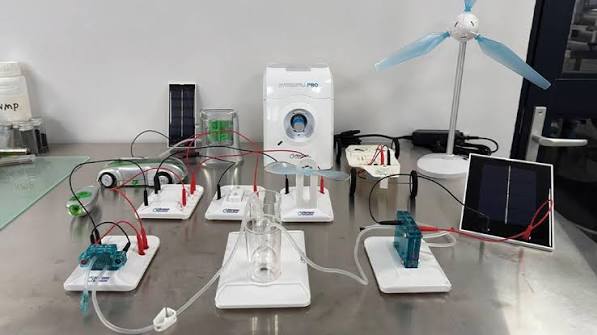
A research group at the University of Johannesburg (UJ) is developing a range of green-hydrogen and energy-storage technologies, spanning catalyst design, membrane-free electrolysers, hydrogen storage materials and fuel cells, in an effort to build domestic technical capability for South Africa's hydrogen ambitions rather than rely wholly on imported systems.
The JENano Group, part of UJ's Department of Mechanical Engineering Science, is led by Professor Tien-Chien Jen, who holds the South African Research Chairs Initiative (SARChI) Chair in Green Hydrogen, funded through the petrochemicals group Sasol and the National Research Foundation.
The group's work covers hydrogen generation, storage and use, and extends into advanced battery materials, on the premise that batteries and hydrogen will play complementary roles in future energy systems. Green hydrogen, produced by splitting water using renewable electricity, is widely regarded as a route to decarbonising hard-to-abate sectors such as steel, chemicals and heavy transport, and South Africa's strong solar and wind resources have positioned it as a potential producer and exporter.
The group's approach combines computational modelling with laboratory work, using atomic-scale simulation to screen materials before they are manufactured and tested, an approach intended to shorten development time.
Among its modelling results is the identification of iron-nickel (FeNi) surfaces as effective, lower-cost catalysts for alkaline hydrogen production, offering a potential alternative to precious-metal systems by relying on abundant, inexpensive materials. Its experimental capability is anchored by what the group describes as South Africa's first atomic layer deposition (ALD) research facility, established through a National Nano Equipment Programme grant of about $1-million, which allows ultra-thin, uniform coatings to be applied with atomic precision to improve catalyst and electrode performance.
The most commercially significant strand is a partnership with Hydrox Holdings, described as Africa's first electrolyser original-equipment manufacturer, on membrane-free electrolysis. Hydrox's patented Divergent-Electrode-Flow-Through (DEFT) system dispenses with the polymer membrane used in conventional proton-exchange-membrane electrolysers, removing one of the most expensive and failure-prone components, using nickel-based porous electrodes to separate hydrogen and oxygen instead.
The technology can produce hydrogen at purities between 99.5% and 99.9995% and is designed to handle the fluctuating power of renewable inputs, with early techno-economic work suggesting it could lower the levelized cost of hydrogen relative to membrane-based systems.
In the partnership, the university contributes modelling and materials expertise while Hydrox provides engineering and commercialisation capability.The group is also researching hydrogen storage, one of the technology's persistent obstacles, through advanced two-dimensional materials such as yttrium-doped borophene, and is pursuing battery work on niobium-modified lithium iron phosphate cathodes aimed at faster charging and longer life.
Several of these projects are supported by collaborations with Chinese universities and research institutes, alongside the Sasol and NRF backing. On the deployment side, the group runs skills-development initiatives, including green-hydrogen learning kits for students, and is exploring the installation of solid oxide fuel-cell units at UJ with a local technology partner.
The broader significance lies less in any single result than in what the programme represents. Africa's green-hydrogen conversation has been dominated by large export projects conceived around foreign offtake and, typically, imported technology. A domestic research group developing catalysts, electrolyser designs, storage materials and skills, and partnering with an African electrolyser manufacturer, is pursuing a different and less visible objective: ensuring that if a hydrogen economy is built on the continent, some of its underlying technology, intellectual property and expertise are African.
The work remains at the research and demonstration stage, and the gap between laboratory results and commercial, cost-competitive deployment is substantial. But the localisation question it addresses, whether Africa will own any of the hydrogen value chain or merely host and import it, is one the export-focused narrative has largely left unasked.