
TotalEnergies switches on Hydra, Africa's largest hybrid renewable project, in the Northern Cape
TotalEnergies and its partners have inaugurated the Hydra project in South Africa's Northern Cape province, combining a 216 MW solar photovoltaic plant with a 500 MWh battery energy storage system in...
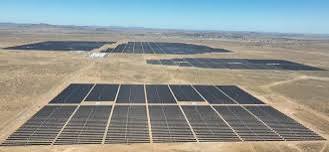
TotalEnergies and its partners have inaugurated the Hydra project in South Africa's Northern Cape province, combining a 216 MW solar photovoltaic plant with a 500 MWh battery energy storage system in what the consortium describes as the largest hybrid renewable energy facility in Africa.
The project supplies 75 MW of dispatchable renewable electricity to the national grid continuously between 05:00 and 21:30 each day under a 20-year power purchase agreement with Eskom, generating more than 400 GWh a year, which TotalEnergies equates to the consumption of roughly 200,000 South African households. It was developed by a consortium comprising TotalEnergies with 35%, Hydra Storage Holding with 35% and Reatile Renewables with 30%, leaving majority equity in South African hands, and reached financial close in December 2023 before construction began.
The defining feature is the relationship between what was built and what is sold. A 216 MW solar plant paired with 500 MWh of storage delivers a contracted 75 MW, roughly a third of installed generating capacity.
That ratio is not inefficiency but design. Solar output peaks in the middle of the day and disappears after sunset, whereas the contract requires a constant, scheduled block spanning more than sixteen hours, including the evening peak when South African demand is highest and when Eskom has historically been most exposed.
Meeting that profile requires generating substantially more energy than is sold during daylight hours and storing the surplus to discharge through the evening. Hydra is, in effect, a demonstration of what converting intermittent solar into firm, schedulable capacity costs in physical terms.
That distinction explains the procurement route. The project forms part of the Risk Mitigation Independent Power Producer Procurement Programme (RMIPPPP), launched by the Department of Mineral Resources and Energy specifically to close South Africa's short-term supply gap with dispatchable capacity rather than with the lowest-cost kilowatt hours.
The programme has had a mixed record, with several preferred bidders failing to reach financial close, and Hydra's progression from award through financing to commissioning places it among the initiative's clearer successes.
For TotalEnergies, the project marks its first hybrid renewable facility in South Africa and extends a domestic portfolio that includes the 86 MW Prieska solar project. The company is separately developing wind and solar capacity to supply Sasol and Air Liquide under long-term corporate power purchase agreements, meaning it is now active in both channels of South Africa's bifurcating electricity market: the state-procured route serving Eskom and the grid, and the private corporate route in which industrial buyers contract directly with developers and wheel power across the network.
TotalEnergies Southern Africa managing director Magali Pailhé said the project enables the supply of dispatchable renewable power to the South African grid, strengthening energy security while decarbonising generation, and reinforces the company's renewable capacity in what she described as the continent's largest power market by consumption. The company reports close to 36 GW of gross renewable generation capacity globally.
The commissioning also sits within a broader shift in African renewable procurement toward hybrid configurations. Solar paired with batteries has moved rapidly from pilot to mainstream, exemplified by Scatec's 1.95 GW solar and 3.9 GWh storage agreement in Egypt signed earlier this year, and reflects a market in which the binding constraint is no longer the cost of solar energy but the value of delivering it on demand. Hydra's entry into service gives South Africa a working reference for that model at utility scale, supplying the grid rather than a single industrial customer.