
Study finds grid-connected green hydrogen could cut power costs and expand wind in Kenya
Green hydrogen produced in connection with Kenya's electricity grid, rather than through standalone export-oriented plants, could lower the cost of renewable power, support greater deployment of wind...
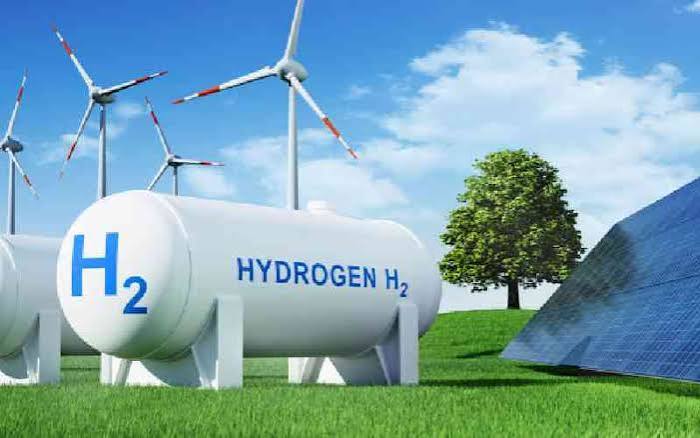
Green hydrogen produced in connection with Kenya's electricity grid, rather than through standalone export-oriented plants, could lower the cost of renewable power, support greater deployment of wind energy and deliver hydrogen at a competitive price, according to a study summarised in Nature Reviews Clean Technology on 7 July 2026.
The research, by Xi Xi of Johns Hopkins University with Beatrice Kinyanjui and Daniel M. Kammen, and published in Environmental Science & Technology, used an energy-system model to test a range of deployment scenarios for electrolysers, wind capacity and electricity demand in Kenya. Its central finding is that hydrogen electrolysers, by acting as a flexible source of demand, reduced the levelized cost of electricity from renewable sources including geothermal and wind, and supported greater wind-energy deployment through to 2050.
That wind expansion, in turn, lowered the cost of the hydrogen itself, a reinforcing loop between flexible demand and renewable build-out.
Under favourable policy conditions, the study found, the cost of domestically produced hydrogen could fall to around $2 per kilogram, a level widely regarded as a threshold for competitiveness. The enabling policies it identified include tariff subsidies and compensation to hydrogen producers for providing ancillary services to the electricity grid, in effect paying electrolysers to switch their consumption up or down in ways that help balance the system.
The study's most consequential conclusion is comparative. Its authors argue that grid-connected green hydrogen systems are better suited than standalone export systems to expanding both renewable-energy deployment and hydrogen production in Kenya. That framing runs against the prevailing model for African green hydrogen, which has largely been conceived around large, dedicated, off-grid plants built to produce hydrogen or ammonia for export to Europe and Asia.
The Kenyan modelling suggests that integrating electrolysers into the domestic power system, where their flexible demand strengthens the grid and pulls in more renewables, may do more for the host country than an enclave built to ship molecules abroad.
The finding lands in a specific Kenyan context. Kenya already generates the large majority of its electricity from renewable sources, with substantial geothermal capacity and growing wind, including the Lake Turkana wind farm, one of Africa's largest. A power system already rich in renewables is precisely the setting in which flexible hydrogen demand can be most useful, soaking up energy that might otherwise be curtailed and improving the economics of further renewable investment. The study positions Kenya less as a would-be hydrogen exporter than as a test case for how a renewables-heavy developing-country grid can use hydrogen to decarbonise and lower costs at home.
The conclusions are those of an energy-system model, and carry the usual caveats: results depend on the scenarios, cost assumptions and policy conditions modelled, and the $2/kg figure is explicitly conditional on supportive tariff and market-design measures that Kenya has not yet implemented.
The study does not assert that grid-connected hydrogen is commercially proven at scale, but rather that, under carefully targeted policy, it offers a more affordable and higher-decarbonization pathway than the export-first alternative. For African policymakers weighing how to enter the hydrogen economy, the research is a data point arguing that the question is not only whether to build green hydrogen, but how, and for whom.