
Chinese module maker Tongwei enters South African commercial solar market via local distributors
Tongwei, one of China's largest solar manufacturers, is entering the South African market through a distribution partnership between SolarWorld Africa and IBC Solar South Africa, the companies announc...
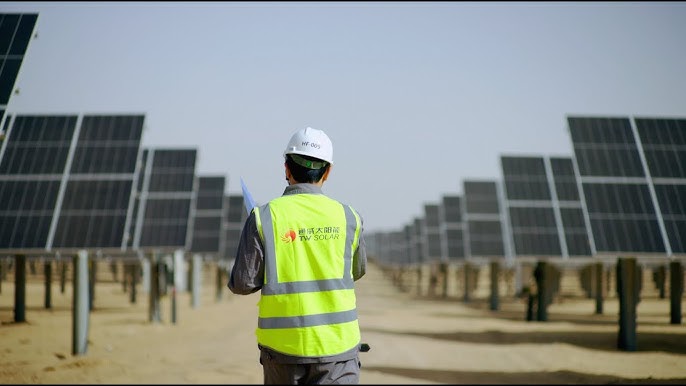
Tongwei, one of China's largest solar manufacturers, is entering the South African market through a distribution partnership between SolarWorld Africa and IBC Solar South Africa, the companies announced, in a move aimed at the country's commercial and industrial (C&I) solar segment.
Under the arrangement, SolarWorld Africa and IBC Solar South Africa will distribute Tongwei's photovoltaic (PV) modules, beginning with the TNC 2.0 N-type TOPCon module rated at 635 W for commercial, industrial and utility-scale applications. SolarWorld Africa managing director Gregor Kuepper said the South African market had matured and that commercial customers increasingly demand proven performance, warranty security and bankable quality rather than competitive pricing alone.
Tongwei, headquartered in Chengdu, holds tier-one status on the BloombergNEF PV module list and has annual module production capacity of approximately 90 GW, spanning the chain from polysilicon to finished modules. q4cdn + 2
The entry is positioned against a South African market reshaped by two converging pressures. Eskom reached 365 consecutive days without loadshedding on 15 May 2026 — its first uninterrupted year of supply since September 2018 — with energy specialists attributing the gain partly to a rapid build-out of behind-the-meter rooftop solar, estimated at more than 7.5 GW, alongside lower demand and improved plant performance.
At the same time, grid electricity costs continue to climb. NERSA approved an average 8.76% tariff increase for Eskom direct customers effective 1 April 2026, with municipal bulk tariffs rising about 9.01% from 1 July. CopperbeltkatangaminingNew Business Ethiopia
That combination — improved supply reliability but rising tariffs — has shifted the commercial rationale for solar from supply security toward cost. The companies cited commercial solar payback periods of two to three years at current tariff levels, and argued that module performance, warranty and bankability now weigh heavily in C&I purchasing decisions.
South Africa's private sector accounts for the majority of new solar installations, with business and commercial users representing 71% of self-generation capacity, according to figures cited in the announcement. q4cdnq4cdn
The market data in the announcement should be read with one caution. The companies cited South African solar installed capacity approaching 9 GW after roughly 12% growth in 2024; independent figures place total installed solar nearer 7 GW for 2024 and behind-the-meter rooftop PV at roughly 7.3–7.5 GW as of 2025, so the 9 GW figure appears to combine categories or run ahead of the verified data.
The broader significance is the deepening presence of Chinese module manufacturers in South Africa's privately-led solar build-out. South Africa has imported an estimated 15 GW of Chinese panels over roughly 15 years, underpinning a behind-the-meter rooftop base that has grown more than 200% since 2022 — a structural reliance on Chinese supply that a new tier-one entrant extends rather than alters.