
Ugandan farmers file UK lawsuit to block $5 billion East Africa oil pipeline
Four Ugandan farmers have filed a case in the High Court of England and Wales seeking to halt the East African Crude Oil Pipeline (EACOP), a novel legal challenge that asks a London court to apply Uga...
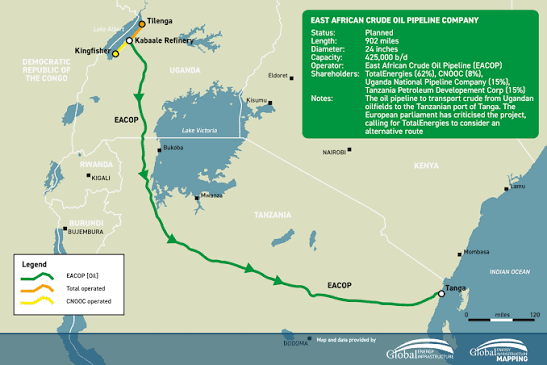
Four Ugandan farmers have filed a case in the High Court of England and Wales seeking to halt the East African Crude Oil Pipeline (EACOP), a novel legal challenge that asks a London court to apply Ugandan environmental and constitutional law to the project's UK-registered operating company as the pipeline nears completion.The claim, filed on 7 July 2026 through London law firm Leigh Day, targets EACOP Ltd, the entity incorporated in England and Wales that is developing, building and operating the pipeline.
The farmers argue that the project breaches Ugandan laws protecting the right to a clean and healthy environment, including the country's constitution, its National Environment Act and its National Climate Change Act of 2021, and are seeking an injunction to stop the pipeline from becoming operational, along with compensation.
They say they are not bringing the case in Uganda because they do not believe they could obtain justice there.The choice of a UK court is the strategic core of the case. Because EACOP Ltd holds its corporate registration at Companies House in London, it falls within the jurisdiction of the English legal system, and the lawsuit forms part of a growing pattern in which communities in lower-income countries seek remedies against multinational energy companies in the courts of the countries where those companies are incorporated.
The farmers' lawyers have said the case seeks remedies that could go to the heart of the project's commercial viability. Legal advisers indicated that a first hearing could take around 12 months, with any trial roughly 18 months away, meaning the litigation may run alongside, rather than ahead of, the pipeline's planned start.EACOP is one of Africa's most significant and contested infrastructure projects.
At about 1,443 km, it will carry crude from Uganda's Albertine Graben oilfields to the Tanzanian port of Tanga, creating the first commercially viable export route for Uganda's landlocked reserves, and on completion will be the world's longest heated crude oil pipeline, since Uganda's waxy crude must be kept at around 50 degrees Celsius to flow. It is designed to transport 216,000 barrels per day, ramping toward roughly 246,000 bpd.
The project is majority-owned by French supermajor TotalEnergies, with a stake of around 62%, alongside China's CNOOC at about 8% and the state oil companies of Uganda (UNOC) and Tanzania (TPDC) at around 15% each. Developers say the pipeline is about 80% complete, with first exports targeted for late 2026.The litigation is the latest in years of opposition. Environmental groups, community organisations and European lawmakers have argued that the pipeline threatens fragile ecosystems and locks East Africa into fossil-fuel dependence.
Campaigners point to potential impacts on the Lake Victoria basin, a freshwater source for millions, and on numerous rivers, wetlands and protected areas along the route, and cite estimates that the pipeline could generate tens of millions of tonnes of carbon emissions annually at peak. Previous legal challenges in the East African Court of Justice and in France did not stop construction, and a sustained campaign has persuaded a number of banks and insurers to withhold financing or cover, though the project has secured the backing it needs to proceed.
For Uganda and Tanzania, the stakes run in the opposite direction. Uganda regards the pipeline as the prerequisite for entering the global crude market, without an export route, its Lake Albert reserves have limited commercial value, and Tanzania has already recorded tax and construction-related revenues from the project before any oil has flowed. Both governments, alongside the developers, have defended EACOP as a driver of jobs, infrastructure and regional energy security, and have previously sought the dismissal of legal petitions against it.EACOP Ltd had not issued a formal response to the filing at the time of reporting. Whether or not the case ultimately halts the pipeline, it adds a fresh layer of legal and reputational risk to a project already contending with financing and insurance headwinds, and tests an increasingly used strategy: holding energy companies accountable in their home jurisdictions for the overseas consequences of their operations.