
Dangote confirms $17 billion, 700,000 bpd refinery will be built at Lamu in Kenya
Aliko Dangote has confirmed that his planned East African oil refinery will be built at Lamu, on Kenya's coast, ending months of speculation over whether the roughly $17 billion, 700,000 barrels-per-d...
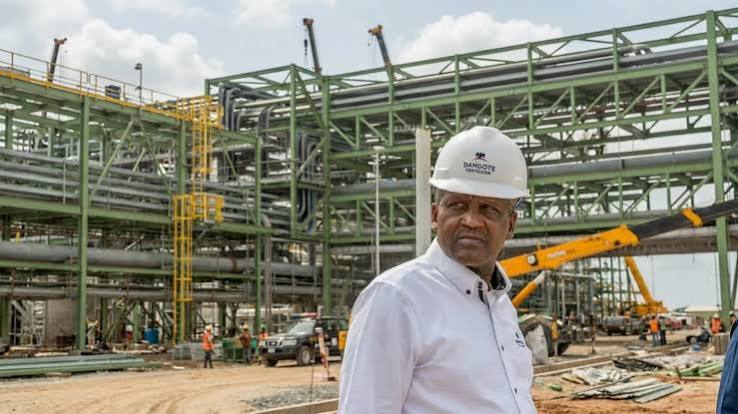
Aliko Dangote has confirmed that his planned East African oil refinery will be built at Lamu, on Kenya's coast, ending months of speculation over whether the roughly $17 billion, 700,000 barrels-per-day (bpd) project would be sited in Kenya or Tanzania and marking the largest private industrial investment yet planned in the region.
Devakumar Edwin, vice president for oil and gas at Dangote Industries, said the site on Lamu Island had been selected, soil tests were under way and design and engineering work had begun, adding that Kenya had been the choice from the outset. A company spokesman confirmed the cost of up to $17 billion.
The refinery is designed as a replica of Dangote's flagship plant outside Lagos and, at 700,000 bpd, would become the largest refinery in East Africa, intended to supply refined products to Kenya, Uganda, Tanzania, South Sudan and neighbouring markets and to cut a region that imports nearly all its refined fuel loose from that dependence. Timelines cited by the company have ranged from about 30 months to between three and five years.
The choice resolves a contest that had strained regional relations. The project was first floated as a joint East African Community refinery at Tanzania's Tanga port, but Dangote shifted toward Kenya, citing the deeper port, the country's larger economy and stronger fuel demand, before settling on Lamu on the northern coast. Kenyan President William Ruto had announced in May that construction would begin this year and said regional governments would invest, with Kenya designating seed capital of around Ksh 21.5 billion.
Dangote has also invited Tanzania to participate in the Lamu investment despite the project's location, a gesture toward the regional cooperation the siting decision had otherwise unsettled.
The refinery sits within a far larger expansion programme. Dangote Industries has said it will invest an additional $46 billion between 2026 and 2028 across refining, cement and fertiliser, part of a drive to lift group revenue toward $100 billion by 2030.
The Lagos refinery, which came online in 2024 at 650,000 bpd, is being expanded toward 1.4 million bpd by 2028, which would make it the largest single refinery in the world; combined with Lamu, the group's total refining capacity would reach about 2.1 million bpd.
The financing plan for Kenya is notable for avoiding heavy external borrowing, drawing instead on internally generated cash, bond issues and proceeds from a planned initial public offering, the same listing the group has been preparing for its Nigerian refinery.
What most distinguishes the Lamu project from the string of East African refinery proposals that failed before it is the sponsor's record.
Large regional refinery plans have repeatedly foundered on financing, shifting government priorities and execution risk. Analysts argue Dangote's proven delivery changes the calculus: having already built and operated a comparable-scale refinery on African soil using a private-sector balance sheet is, as one banking analyst put it, the single biggest bankability signal a project of this kind can offer.
That credibility, backed by an established operating business rather than a greenfield concept, is the strongest argument that Lamu will be built where others were not.
Two cautions temper the confidence, however, and both are visible in Dangote's own history.
The Lagos refinery ultimately cost more than $20 billion against an original estimate of about $9 billion, as construction delays, currency depreciation, the pandemic and inflation drove spending far above plan; a $17 billion estimate for a comparable East African plant should be read against that record of cost escalation.
And the outstanding commercial question, flagged by analysts, is policy: whether East African governments will provide the protections against low-cost imported fuel that a domestic refinery needs to remain viable, the same condition Dangote has stressed elsewhere.
For now, nothing has been poured at Lamu; the work is preparatory, and no groundbreaking date has been set.
The location is settled, and the sponsor's credibility is real, but whether Lamu becomes East Africa's refining anchor or another project whose costs and timelines outrun their estimates will not be clear for years.
Devakumar Edwin, vice president for oil and gas at Dangote Industries, said the site on Lamu Island had been selected, soil tests were under way and design and engineering work had begun, adding that Kenya had been the choice from the outset. A company spokesman confirmed the cost of up to $17 billion.
The refinery is designed as a replica of Dangote's flagship plant outside Lagos and, at 700,000 bpd, would become the largest refinery in East Africa, intended to supply refined products to Kenya, Uganda, Tanzania, South Sudan and neighbouring markets and to cut a region that imports nearly all its refined fuel loose from that dependence. Timelines cited by the company have ranged from about 30 months to between three and five years.
The choice resolves a contest that had strained regional relations. The project was first floated as a joint East African Community refinery at Tanzania's Tanga port, but Dangote shifted toward Kenya, citing the deeper port, the country's larger economy and stronger fuel demand, before settling on Lamu on the northern coast. Kenyan President William Ruto had announced in May that construction would begin this year and said regional governments would invest, with Kenya designating seed capital of around Ksh 21.5 billion.
Dangote has also invited Tanzania to participate in the Lamu investment despite the project's location, a gesture toward the regional cooperation the siting decision had otherwise unsettled.
The refinery sits within a far larger expansion programme. Dangote Industries has said it will invest an additional $46 billion between 2026 and 2028 across refining, cement and fertiliser, part of a drive to lift group revenue toward $100 billion by 2030.
The Lagos refinery, which came online in 2024 at 650,000 bpd, is being expanded toward 1.4 million bpd by 2028, which would make it the largest single refinery in the world; combined with Lamu, the group's total refining capacity would reach about 2.1 million bpd.
The financing plan for Kenya is notable for avoiding heavy external borrowing, drawing instead on internally generated cash, bond issues and proceeds from a planned initial public offering, the same listing the group has been preparing for its Nigerian refinery.
What most distinguishes the Lamu project from the string of East African refinery proposals that failed before it is the sponsor's record.
Large regional refinery plans have repeatedly foundered on financing, shifting government priorities and execution risk. Analysts argue Dangote's proven delivery changes the calculus: having already built and operated a comparable-scale refinery on African soil using a private-sector balance sheet is, as one banking analyst put it, the single biggest bankability signal a project of this kind can offer.
That credibility, backed by an established operating business rather than a greenfield concept, is the strongest argument that Lamu will be built where others were not.
Two cautions temper the confidence, however, and both are visible in Dangote's own history.
The Lagos refinery ultimately cost more than $20 billion against an original estimate of about $9 billion, as construction delays, currency depreciation, the pandemic and inflation drove spending far above plan; a $17 billion estimate for a comparable East African plant should be read against that record of cost escalation.
And the outstanding commercial question, flagged by analysts, is policy: whether East African governments will provide the protections against low-cost imported fuel that a domestic refinery needs to remain viable, the same condition Dangote has stressed elsewhere.
For now, nothing has been poured at Lamu; the work is preparatory, and no groundbreaking date has been set.
The location is settled, and the sponsor's credibility is real, but whether Lamu becomes East Africa's refining anchor or another project whose costs and timelines outrun their estimates will not be clear for years.