
Sonangol secures $2.65bn from four foreign banks as Angola funds output decline and refinery push
Angola's state oil company Sonangol has secured $2.65-billion in financing from a syndicate of four international banks, a company spokesperson confirmed on 16 June 2026, in the latest of a series of...
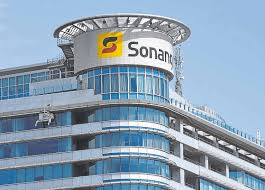
Angola's state oil company Sonangol has secured $2.65-billion in financing from a syndicate of four international banks, a company spokesperson confirmed on 16 June 2026, in the latest of a series of fundraisings by a producer working to arrest falling output and finance major downstream investment.
According to the company, the lenders are South Africa's Standard Bank and Absa, France's Société Générale and the United Arab Emirates' First Abu Dhabi Bank. Sonangol said the funds would cover operational expenditure and capital investment, but did not disclose the terms of the facility, including its interest rate, maturity or structure.
As the largest company in Africa's second-largest crude exporter, Sonangol operates across the energy chain, from exploration and production of oil and gas to refining and distribution.
The financing comes against a backdrop of structural production decline. Angola's oil output fell below one million barrels per day in July 2025, its lowest since March 2023, as ageing offshore fields entered natural decline after years of underinvestment. Sustaining and lifting production requires continuous spending on development drilling, field developments and facility maintenance, which is the operational pressure the new facility partly addresses.
The country's National Agency for Petroleum, Gas and Biofuels (ANPG) has set a recovery target of maintaining average output around 1.1-million barrels per day through 2027.
The deal is one of several Sonangol has concluded since the start of the year. In January 2026, the company secured a $1.75-billion receivables-backed facility from the African Export-Import Bank (Afreximbank) to support its crude-trading and working-capital needs, and in the same month raised $750-million on international markets through a five-year bond carrying a 10% coupon.
Sonangol is separately in talks with Chinese financial institutions for a $4.8-billion loan toward the construction of a new refinery at the Atlantic port of Lobito, a project estimated at $6.2-billion in total and intended to reduce Angola's dependence on imported refined products.
The pace of borrowing reflects the structural exposure of an economy in which oil accounts for roughly a fifth of gross domestic product and the large majority of exports, by World Bank figures, so that any production decline feeds directly into public finances and the state's investment capacity. It also illustrates a financing pattern in which Angola is diversifying its lender base across pan-African institutions, international bond markets, Gulf and European banks, and Chinese creditors.
According to China's ambassador to Luanda, Angola's outstanding debt to Chinese creditors had fallen to about $12.9-billion in 2025, from a previously estimated $24-billion, indicating a gradual rebalancing away from the Chinese-loan dependence that characterised the country's earlier borrowing.
The transaction is consistent with the broader recovery narrative in Angola's upstream, where international majors have committed renewed capital, but it also underlines the central tension in that narrative: production is declining at the mature fields that generate current revenue, and arresting that decline requires sustained external financing that the new facilities are intended to supply.