
Murphy Oil strikes light oil at Bubale-1X, closing its Côte d'Ivoire campaign on a discovery
US independent Murphy Oil has made an oil discovery offshore Côte d'Ivoire, recovering the third and final well of its current exploration campaign and reinforcing the West African country's emergence...
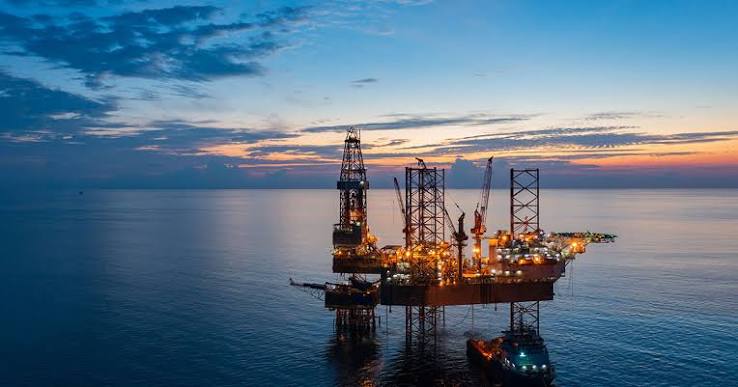
US independent Murphy Oil has made an oil discovery offshore Côte d'Ivoire, recovering the third and final well of its current exploration campaign and reinforcing the West African country's emergence as a frontier producer.
The Bubale-1X well, in Block CI-709 about 40 miles (64 km) offshore, was drilled to a total depth of 20,548 feet (6,263 m) in 7,795 feet (2,376 m) of water and encountered 100 feet (30 m) of net oil pay across two reservoirs, with preliminary assessment indicating high-quality light oil.
The well was spud in late February 2026 by Murphy CI-709 Oil Co., a subsidiary that operates the block with a 90% working interest; the national oil company, Société Nationale d'Opérations Pétrolières de la Côte d'Ivoire (PETROCI), holds the remaining 10%.
Bubale-1X is the third and final well in Murphy's current three-well campaign offshore Côte d'Ivoire.
The first two did not yield commercial results. The Civette-1X well on Block CI-502 encountered hydrocarbons but was deemed non-commercial, while the Caracal-1X well on Block CI-102 was plugged and abandoned as a dry hole, though the company said both helped confirm an active petroleum system in the basin. Murphy plans one further well in the second half of 2026 to test the extent of the discovery and define its commercial potential.
Murphy chief executive Eric Hambly said the early results reinforced the prospectivity of the company's Côte d'Ivoire acreage and underscored the value of a disciplined exploration approach. For Murphy, the discovery adds to a global portfolio that spans the Eagle Ford and other US onshore plays, the Gulf of America, Canada and Vietnam. Stuk
The find lands amid intensifying interest in Côte d'Ivoire's offshore. The sector gained momentum after Eni's Baleine discovery in 2021, the largest hydrocarbon find in the country's history, followed by the Calao discovery, and other operators including VAALCO Energy, CNR International and Petrobras are increasing activity in the basin. The government is targeting production growth from around 60,000 barrels per day (bpd) to roughly 200,000 bpd by 2027, with longer-term ambitions of 500,000 bpd and more than one billion cubic feet of gas per day by 2035.
Those targets carry an important caveat that the headline discovery does not resolve. Bubale-1X is an exploration success, not yet a development: the find must still be appraised, sized and judged commercially viable before it contributes a single barrel, and the two non-commercial wells that preceded it are a reminder that an active petroleum system does not guarantee economic volumes. Côte d'Ivoire's path from its current output to its 2027 and 2035 goals depends on a sequence of such finds converting into sanctioned developments, a conversion that remains, for Bubale as for the basin, still to be proven.