
Dangote signals Kenya's Mombasa as preferred site for $17bn East African refinery
Nigerian industrialist Aliko Dangote has indicated that Kenya is his preferred location for a proposed $15-billion to $17-billion East African refinery, according to African Energy, appearing to tilt...
Nigerian industrialist Aliko Dangote has indicated that Kenya is his preferred location for a proposed $15-billion to $17-billion East African refinery, according to African Energy, appearing to tilt a closely watched contest between Kenya and Tanzania toward the Kenyan coast and reshaping one of the largest private industrial investments ever proposed in the region.
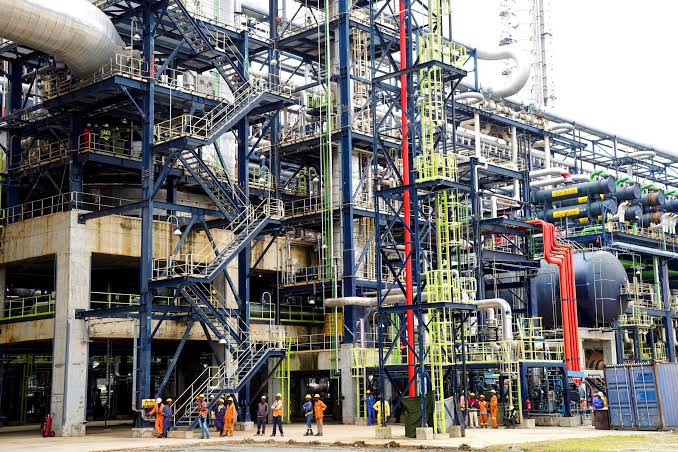
The project would replicate Dangote's flagship 650,000 barrels-per-day (bpd) refinery outside Lagos, currently the world's largest single-train plant, and is intended to serve Kenya, Uganda, Tanzania, Ethiopia, South Sudan and the Democratic Republic of Congo, reducing an East African dependence on imported refined products that leaves the region exposed to Middle Eastern supply disruptions. In an interview with the Financial Times in May 2026, Dangote said he was leaning toward Kenya's port city of Mombasa over Tanzania's Tanga, citing Mombasa's larger, deeper port and Kenya's bigger economy and fuel consumption. He subsequently floated Lamu, a Kenyan coastal town, as a further option, narrowing the field to a roughly 370-kilometre stretch of Kenyan Indian Ocean coastline.
The choice hinges on competing logics of feedstock and market. Tanzania's case rested chiefly on the East African Crude Oil Pipeline (EACOP), which runs from Uganda's Hoima oil fields to a terminal at Tanga, making the Tanzanian port the natural site for a refinery processing Ugandan crude. Kenya's case rests on infrastructure and demand: Mombasa's Kilindini Harbour is East Africa's busiest deep-water terminal, able to receive the very large crude carriers a 650,000 bpd plant requires and already serving the region's petroleum distribution, while Kenya is East Africa's largest economy and fuel market. Dangote's stated preference indicates that direct seaborne crude supply to a deep port outweighed the pipeline-adjacency argument in his assessment.
The contest has carried a diplomatic cost. The refinery was first announced as a Tanga project by Kenyan President William Ruto at an Africa Finance Corporation summit in Nairobi in April 2026, with Dangote and Ugandan President Yoweri Museveni present. Tanzanian President Samia Suluhu Hassan, who was not at the event, subsequently said she had not been consulted, and publicly rebuked Ruto over the unilateral announcement during his state visit to Dar es Salaam on 4 May. President Suluhu later met Dangote in Dar es Salaam on 16 May, and Tanzania has continued to press its bid at presidential level, leaving open the possibility of a role in crude supply or a phased arrangement even if the main refinery moves to Kenya.
Dangote has attached demanding conditions to proceeding. He has said he requires land, a financing contribution from East African governments, and, critically, protection against the dumping of cheap refined fuel from Russia and India, arguing that no refinery can survive without it. He indicated that with an agreement in place, construction could begin within the year and the plant be built within four to five years, and placed the decision squarely with President Ruto.
The proposal complicates an already crowded East African refining landscape. Uganda is advancing its own $4-billion, 60,000 bpd refinery at Hoima, with a final investment decision expected around mid-2026, and Museveni has said Uganda will continue that project while also supporting and potentially buying shares in the regional plant. Angola's Cabinda refinery, meanwhile, has begun supplying fuel, part of a broader continental push toward domestic refining. A Dangote refinery on the Kenyan coast, if realised, would position Kenya as the dominant fuel hub for East and Central Africa, but the project remains at the preferred-site stage, with no binding agreement signed, no financing closed and the regional politics not fully settled.