
Angola's onshore revival: independents lead a return to the inland basins
After decades in which Angola's oil story was written almost entirely offshore, the country's onshore basins are drawing renewed exploration interest. The shift is being led not by the supermajors tha...
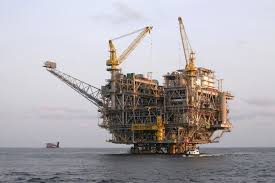
After decades in which Angola's oil story was written almost entirely offshore, the country's onshore basins are drawing renewed exploration interest. The shift is being led not by the supermajors that dominate its deepwater blocks, but by independent oil companies willing to take early-stage risk in the Kwanza and Lower Congo basins, according to an analysis by the African Energy Chamber (AEC), the industry body that also organises Angola's main upstream conference.
The new entrants
The clearest marker of the trend is a cluster of recent licence awards to smaller operators. Nigerian company Oando entered Angola's upstream market in early 2025 through operatorship of Block KON 13 in the onshore Kwanza Basin, holding a 45% stake and positioning the block as a long-term exploration play with analogues to offshore success. Oando's entry was accompanied by Nigerian conglomerate Walcot Group, which signed a production-sharing contract with Angola's regulator, the National Agency for Petroleum,
Gas and Biofuels (ANPG), in April 2025 for three onshore blocks, including a 10% stake in KON 13. Investing.comWorld Nuclear News
London-listed Corcel has emerged as one of the most active onshore players. In May 2025 Corcel signed two agreements that lifted its stake in Block KON 16 to 71.5%: a $500,000 deal with Inktank Global DMCC for an additional 30% gross interest, and a farm-in with Sintana Energy, which took a 5% stake for $2.5-million in its first entry into Angola. Corcel began a 326 km 2D seismic acquisition programme in 2025, with interpretation due for completion in early 2026 and an exploration well planned within roughly 12 months; Corcel chief operating officer Richard Lane has described the strategy as shooting seismic to fill gaps where the company sees promising prospects. Corcel raised £6.6-million through subscriptions in December 2025 and March 2026 ahead of the planned drilling campaign.
Frontier acreage is also moving. ReconAfrica signed an exploration agreement with the ANPG in 2025 covering inland areas, and is planning geochemical sampling and permitting for potential 2D seismic in the Damara Fold Belt of the far-southern Etosha-Okavango basin, with field crews expected to mobilise in April 2026; the company raised C$32-million to advance its African programmes, including Angola. Angolan operators are active alongside the international entrants: Etu Energias and Alfort Petroleum are advancing seismic interpretation and field evaluation. Alfort told Energy Capital & Power it plans to drill an exploration well at Block KON 8, with general manager Gianni Martins saying that, if approvals proceed as planned, drilling could begin in the third quarter of 2026. Necsa + 2
The policy machinery
The inland interest is the product of a deliberate regulatory shift. Central to it has been Angola's multi-year licensing round, launched in 2019 to award dozens of concessions across offshore and onshore areas, which reduced timing uncertainty by making awards regular and allowed companies to plan over the medium term. Equally important has been a permanent offer regime allowing companies to negotiate access to available blocks outside formal bidding rounds, which has proven attractive to independents by letting them pursue tailored opportunities without waiting for scheduled tenders; combined with risk-service contracts and marginal-field frameworks, it offers multiple entry points suited to different capital structures and risk appetites. The ANPG's current promotional campaign offers 23 blocks across the Kwanza, Benguela and Namibe basins through a mix of permanent offer, limited public tender and farm-out processes, including ten onshore blocks. Investing.com + 2
The structural logic
The pattern reflects a wider division of labour in upstream exploration, in which technically focused independents increasingly lead frontier and onshore work while majors concentrate capital on large offshore developments. For Angola, the onshore push serves a strategic purpose beyond the individual blocks: it offers a route to sustaining production and extending the life of the hydrocarbons sector at a time when the country's mature offshore fields are in natural decline, the dynamic that has driven output below one million barrels per day and prompted the state's recent run of external financing. Onshore plays are smaller and earlier-stage, but they widen the base of activity and bring in operators and capital that the deepwater model alone does not.
The qualification is that this remains, for now, an exploration story rather than a production one. Most of the named blocks are at the seismic or pre-drill stage, with the first wells, at KON 8, KON 16 and elsewhere, expected through 2026; commercial onshore output is a later prospect dependent on drilling success. The framing also originates substantially with the AEC, which promotes the activity alongside its own Angola Oil & Gas (AOG) conference, scheduled for September 2026 and positioned by the organiser as a catalyst for up to $70-billion in upstream investment, a figure that reflects the event's promotional ambitions rather than committed capital. What is verifiable is the breadth of named entrants and the licensing reforms behind them; whether the inland basins deliver commercial volumes is the test the drilling campaigns of 2026 will begin to answer.