
The Rooftop Revolution: How Commercial and Industrial Solar Is Quietly Electrifying Africa's Businesses
The story of African solar is often told through mega-projects: 500 MW bids, utility-scale farms, government tenders. But the transformation happening at the commercial and industrial level is arguabl...
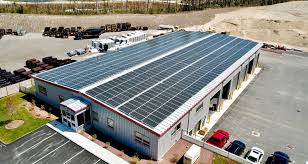
The story of African solar is often told through mega-projects: 500 MW bids, utility-scale farms, government tenders. But the transformation happening at the commercial and industrial level is arguably more consequential — and far less discussed.
Across the continent, businesses have stopped waiting for the grid. From Nairobi to Lagos to Johannesburg, factories, hospitals, shopping centres, and cold-chain operators have installed rooftop solar not as a green statement but as a survival strategy. In markets where diesel generators have historically eaten 15 to 30 percent of operating costs, solar delivers a straightforward economic argument that requires no ideological commitment to sustainability.
The Commercial & Industrial (C&I) segment has become one of the fastest-growing solar subsectors on the continent. Unlike utility-scale projects that require government PPAs, regulatory approval, and grid connection, C&I solar is largely self-directed. A business owner with a large enough roof and access to financing can reduce energy costs within months of installation.
The financing models have matured accordingly. Solar-as-a-service, where an operator installs and maintains a system in exchange for a fixed monthly fee below the customer's current energy bill, has unlocked access for businesses that lack upfront capital. In South Africa, Kenya, Nigeria, and Ghana, these pay-as-you-save structures have moved C&I solar from a niche product into a mainstream business decision.
Storage integration is accelerating the shift further. A manufacturing plant that pairs rooftop solar with a battery system can now achieve full daytime energy independence, reduce peak-demand charges, and maintain operations during outages — a particularly valuable proposition in countries where grid reliability is measured in hours per day rather than days per year.
The broader implication is structural: as C&I solar scales, the pressure on national utilities to solve reliability at scale intensifies. Businesses are demonstrating, one rooftop at a time, that the energy problem is solvable. The question is whether public infrastructure can keep pace.