
Mini-Grids: The Infrastructure That Could Actually Solve African Energy Poverty
Approximately 590 million people in Africa had no access to electricity as of 2023. The national grid, in its traditional form, will not solve this problem. The economics don't work: extending transmi...
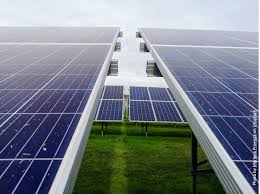
Approximately 590 million people in Africa had no access to electricity as of 2023. The national grid, in its traditional form, will not solve this problem. The economics don't work: extending transmission lines to remote, low-density communities costs more to build than the energy revenue they generate will ever recover. A different infrastructure model is needed, and mini-grids are the strongest candidate the industry has.
A mini-grid is a localised power system — typically solar-plus-storage, sometimes hybrid with diesel — that generates and distributes electricity to a defined community independent of the national grid. At its simplest, it is a village-scale utility. At its most sophisticated, it is an intelligent, remotely managed system that can respond to demand in real time, integrate new generation sources, and eventually connect to a wider network as the national grid expands.
The mini-grid sector has matured substantially in the past five years. Early projects were expensive, bespoke, and difficult to replicate. Today, modularised technology, standardised designs, and software platforms that allow operators to manage dozens of sites remotely have brought costs down significantly. Mini-grid electricity tariffs in East and West Africa are now, in many cases, lower than the cost of kerosene or diesel that communities previously relied on.
Development finance is scaling up accordingly. The African Development Bank's Sustainable Energy Fund for Africa has approved new financing instruments specifically for off-grid renewable projects in fragile states. Blended finance vehicles are combining concessional capital with private equity to bridge the gap between project viability and bankability.
The remaining challenge is not technological — it is regulatory. Many African countries still lack licensing frameworks that give mini-grid operators sufficient revenue certainty to attract long-term financing. The spectre of the national grid eventually arriving and stranding a private mini-grid investment still deters some capital.
Countries that have solved this — through 'anchor + grow' models that allow mini-grids to eventually integrate into the national grid, or through government guarantee schemes — are seeing faster mini-grid deployment. The technology is ready. The finance is mobilising. What remains is regulatory clarity, one country at a time.