
BESS Is Not a Buzzword Anymore: Battery Storage Is Reshaping African Energy Economics
Ask any independent power producer what killed a promising solar project in Africa five years ago, and the answer usually involves one of three things: grid connectivity, offtake risk, and intermitten...
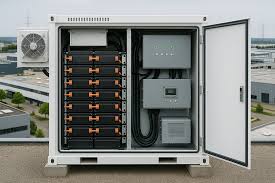
Ask any independent power producer what killed a promising solar project in Africa five years ago, and the answer usually involves one of three things: grid connectivity, offtake risk, and intermittency. The third one — intermittency — is quietly disappearing from the equation.
Battery Energy Storage Systems have undergone a pricing collapse that few expected this fast. New price points and technological improvements are now making solar-plus-storage combinations fundamentally competitive with conventional generation across most African markets. The Africa Solar Outlook 2026 identifies this as the single most significant technological shift in the continent's solar sector.
South Africa is leading the large-scale integration charge. TotalEnergies is constructing a 216 MW solar plant in the Northern Cape paired with a 500 MWh BESS — a configuration that, once operational, will dispatch electricity on demand rather than only when the sun shines. That is a fundamental change in how solar is sold and financed.
In East Africa, the picture is equally compelling at the small end. RelyEZ is delivering hybrid solar-storage-diesel microgrids to nine remote villages in Kenya under a government rural electrification programme. In Burkina Faso, the company has secured an EPC contract combining 40 MW of solar with a 10 MW/30 MWh battery system in the Koudougou region to improve grid stability.
The shift matters for project finance as much as for electrons. Bankable storage means bankable projects. Lenders who previously priced intermittency risk into their terms — or declined to lend at all — are gaining confidence in storage-backed structures. This is beginning to reduce the lag between contract signatures and project financial close, a delay that historically plagued the African renewables pipeline.
By 2030, analysts project Africa could exceed 30 GWh of installed storage capacity, making it the fastest-growing energy storage market in the world. That number will seem obvious in hindsight. For now, it represents a structural shift that is already under way.
The battery has become the new transformer — the piece of hardware that determines whether the rest of the system is worth anything.