
Africa's Solar Reckoning: Why 2026 Is the Year the Continent Stops Talking and Starts Building
For years, the story of African solar has been told in potential — in terawatts the continent could generate, in millions of homes that could be lit. That story is finally changing tense. Africa's in...
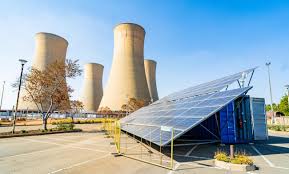
For years, the story of African solar has been told in potential — in terawatts the continent could generate, in millions of homes that could be lit. That story is finally changing tense.
Africa's installed solar capacity reached 19.2 GW by the end of 2024. That number alone tells you little. What matters is the direction: the Global Solar Council projects annual solar installations across Africa will rise 42 percent in 2025, and an additional 23 GW is expected by 2028. More than doubling current deployment in under four years is not incremental progress. It is acceleration.
Several forces are colliding to make this moment possible. Battery Energy Storage Systems (BESS) — once too expensive to stack onto a solar project's balance sheet — have crossed a new price threshold. For the first time, PV-plus-storage combinations are cost-competitive with conventional baseload power across most of the continent. Intermittency, the argument that killed many a solar pitch in front of a sceptical utility board, no longer holds the same weight.
South Africa continues to lead on absolute volume, with over 18 GW of identified capacity — but the more interesting story is happening at the edges. Namibia has surpassed the Seychelles to claim the top spot in installed capacity per capita. Tunisia commissioned the 120 MW Kairouan Solar PV plant and broke into the continental top five for the first time. Chad, Liberia, and Sudan each made double-digit jumps in Africa-wide rankings.
Ghana and Switzerland jointly launched a $200 million National Clean Energy Programme in 2025 to develop 137 MW of rooftop solar across approximately 4,000 installations. In a country where grid reliability remains inconsistent, rooftop solar is not an upgrade — it is infrastructure.
In November 2025, COP30 in Brazil generated over $50 billion in new pledges for African renewables, with specific earmarks for off-grid solar and mini-grids in underserved regions. The Nairobi Declaration, which targets 300 GW of renewable capacity by 2030 (up from 56 GW in 2022), is now backed by capital in a way it never was before.
The transition from aspiration to execution is rarely clean. Grid infrastructure still lags badly behind generation ambition. Permitting processes remain slow. Currency risk still scares private capital. But the 2026 outlook contains something the prior decade lacked: genuine momentum. Projects are moving from pipeline to shovel. Numbers that once lived in reports are turning into turbines, panels, and batteries in the ground.
The continent that generates the most solar radiation on Earth is finally building the infrastructure to use it.