
Africa's Grid Gap: The Infrastructure Crisis That Is Strangling the Renewables Boom
The energy transition in Africa has a bottleneck, and it is not solar panels or wind turbines. It is transmission wire. Africa currently accounts for less than 3 percent of the world's electricity gr...
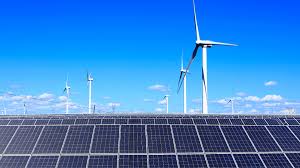
The energy transition in Africa has a bottleneck, and it is not solar panels or wind turbines. It is transmission wire.
Africa currently accounts for less than 3 percent of the world's electricity grid length, despite being home to nearly 18 percent of the global population. The continent needs to add at least 16 GW of new grid-connected generation capacity every year until 2050, and invest between $3.2 billion and $4.3 billion annually in transmission infrastructure just to meet basic growth targets. Neither number is being hit.
In South Africa, where the renewable energy pipeline is well-developed, the transmission system has become the primary constraint on deployment. Speaking at Enlit Africa 2026 in Cape Town, executives and financiers described a combined Transmission Expansion Plan and Independent Transmission Projects pipeline representing approximately R440 billion in capital requirements — with near-term collector grid needs adding another R30 billion. Against this backdrop, the government and industry are trying to unlock 5 GW of additional grid capacity in the near term to support renewable energy wheeling.
The African Development Bank's Sustainable Africa Scenario assumes annual investment in electricity grids more than triples between 2026 and 2030, reaching $40 billion per year on average, with distribution networks accounting for over two-thirds of the total. Achieving this is, in the IEA's own language, "far from simple." Existing financing mechanisms are inadequate for infrastructure at this scale and risk profile.
The deeper problem is systemic. Renewable energy is only as powerful as the network that delivers it. Projects are being built — solar farms, wind parks, hydropower developments — that cannot fully evacuate their power because the transmission infrastructure to carry it doesn't exist. In some cases, these are not hypothetical risks but active constraints on operating projects.
Solving the grid gap requires a combination of public investment, private participation, regulatory innovation, and financing mechanisms that currently exist in fragmented, underdeveloped forms. The 2026 theme of Enlit Africa — "compounding impact" — captures the challenge accurately: small, targeted improvements in grid access, distribution performance, and revenue certainty are what unlock the larger transformation. The pieces exist. The assembly is still missing.